


PTC for Software: Premium AI Translation, Consistent Across Your Website and Product
Do you develop software or mobile apps alongside your WordPress site? PTC, WPML’s AI translation engine, now translates them too.

Our analysis of 60,000+ WordPress plugins and themes shows community translation covers under 5% of needs in 40 languages. See data and what works instead.

Another 500 strings dropped today…
no way we’ll finish this week.

I can’t keep up with plugin updates.
We analyzed the most widely used WordPress plugins and themes — the ones powering millions of websites. These products should, in theory, receive the most translation attention. In reality, the numbers show a troubling gap between potential users and actual translation coverage.
Theme and Plugin Translation Gaps in European Audiences
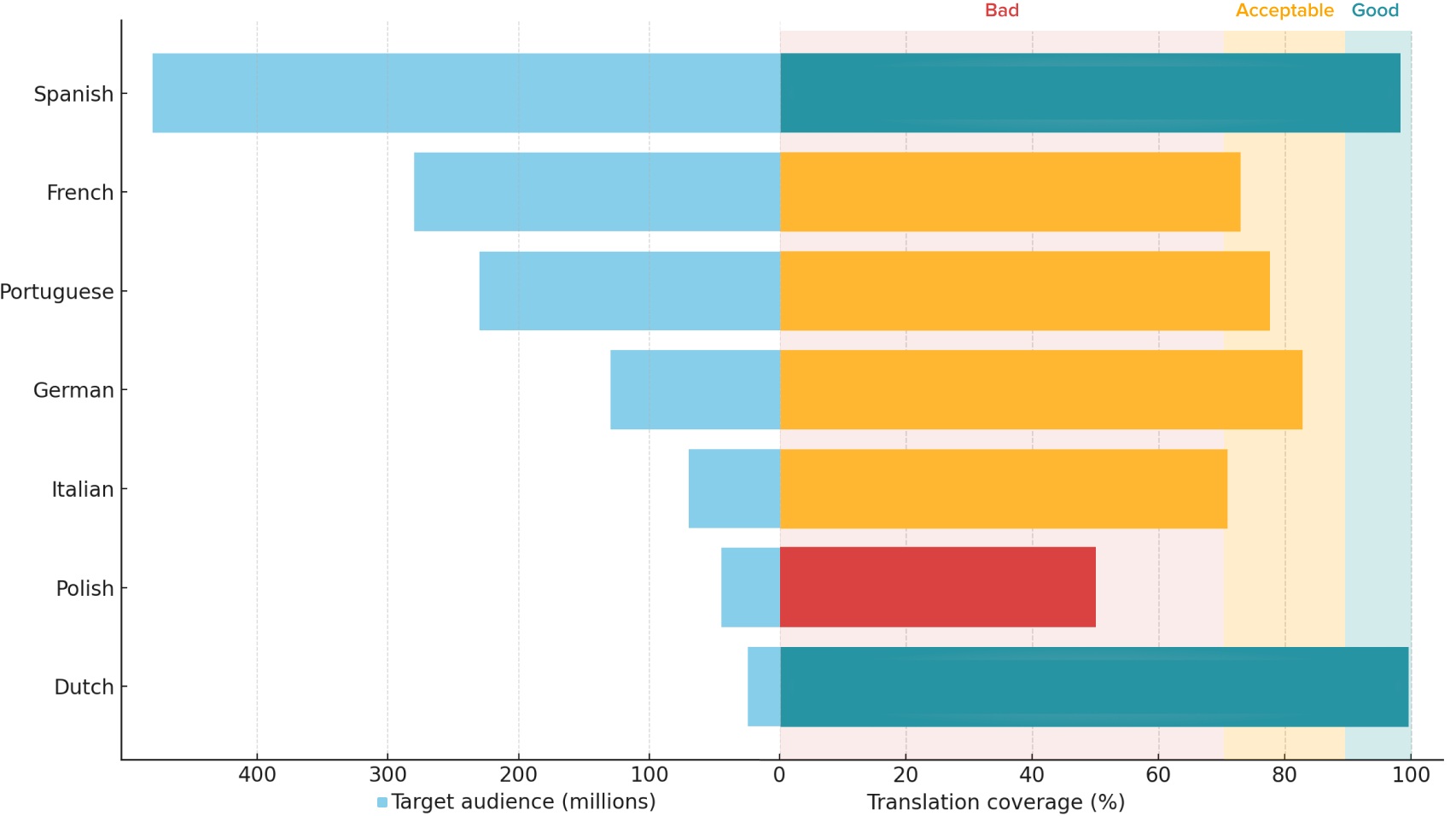
Europe looks better than other regions, but the gaps are still clear. Polish is the biggest red flag: more than 45 million speakers, yet translation coverage is very low. That’s a lot of users dealing with half-translated products.
German, Italian, and Portuguese do a bit better, but they still leave users with a patchy experience. Only Dutch, Spanish, and French come close to “good” coverage, with Dutch standing out as a smaller community that punches above its weight. For most other languages, though, translations just don’t keep pace.
Theme and Plugin Translation Gaps in Asian Audiences
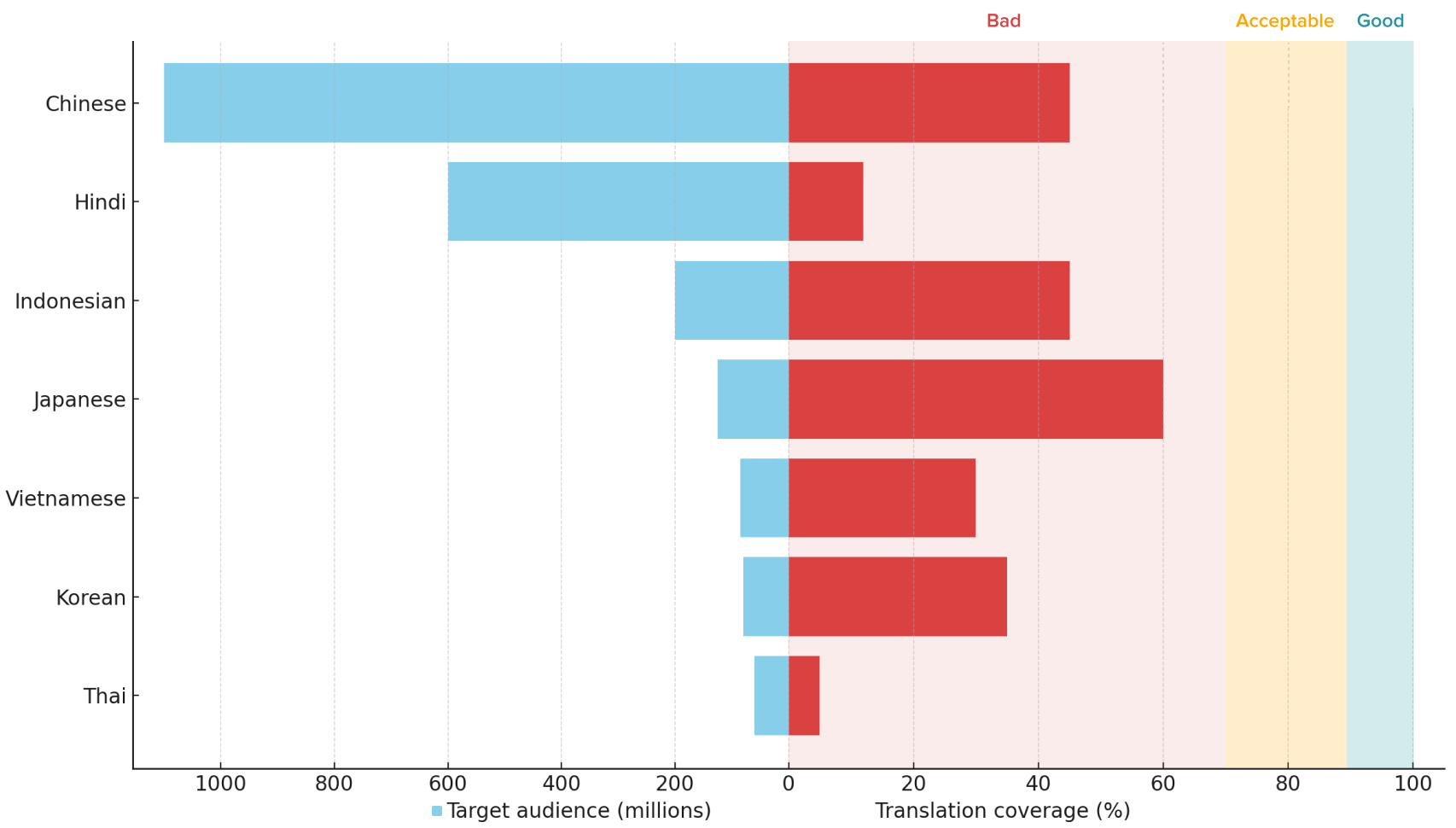
In Asia, the situation is much worse. Chinese and Hindi together account for more than 1.7 billion speakers, yet translation coverage is almost nonexistent. These aren’t small markets — they’re the biggest in the world — but WordPress products remain largely inaccessible.
It’s the same story for Indonesian, Vietnamese, and Thai: huge audiences, almost no translations. Even Japanese and Korean, which do better than most, still fall short of complete coverage.
The result is obvious: community translators simply can’t keep up with the scale of demand.
Translation isn’t a one-time job. It never stops. WordPress has over 60,000 plugins and 10,000 themes, and even if we count only the active ones, the workload is massive. Updates bring new strings across dozens of languages, adding up to tens of millions every year. For volunteers it’s simply too much. The community works hard, but the scale has grown beyond what people can handle.
actively maintained and needing manual translation support
frequent releases bring new or changed strings every few months
even small updates generate dozens of new phrases
multiplying the effort across global audiences
need translation every year just to keep up

Contributors have their own jobs and sometimes run businesses. They really want to help you, but they can’t always be there exactly when you need them.

Translations are part of your product and you need to approve them. But how can you approve or reject translations to languages that you don’t speak? Approval is one of the major bottlenecks of community translation.

Translation is not a one-time project. With every new release, there are new texts to translate and review.
To deliver good translations, on time, every time, your options are:
The table below compares these four options across key criteria, so you can see their strengths and limitations side by side.
With PTC, you can:
And the pricing? It’s built with developers in mind:
The WordPress community is what made WordPress so successful. But translating themes and plugins at scale can become an overwhelming challenge, even for the most dedicated translation teams.
If you’re aiming for fast, reliable, and high-quality translations across multiple languages and releases, PTC offers a practical, developer-friendly alternative. The companies behind some of your favorite and most popular themes, plugins, and page builders are already using it to deliver human-quality translations in dozens of languages. Your product deserves the same.
Try PTC free of charge, no credit card required, and see how it works for your WordPress products.
New strings detected in the source file
3,000 strings translated using AI
Updated translations sent back via merge request
Do you develop software or mobile apps alongside your WordPress site? PTC, WPML’s AI translation engine, now translates them too.
Last month, we released WPML 4.8 , which upgrades how glossaries work with AI translation.
Managing your website’s translations just got a whole lot easier.